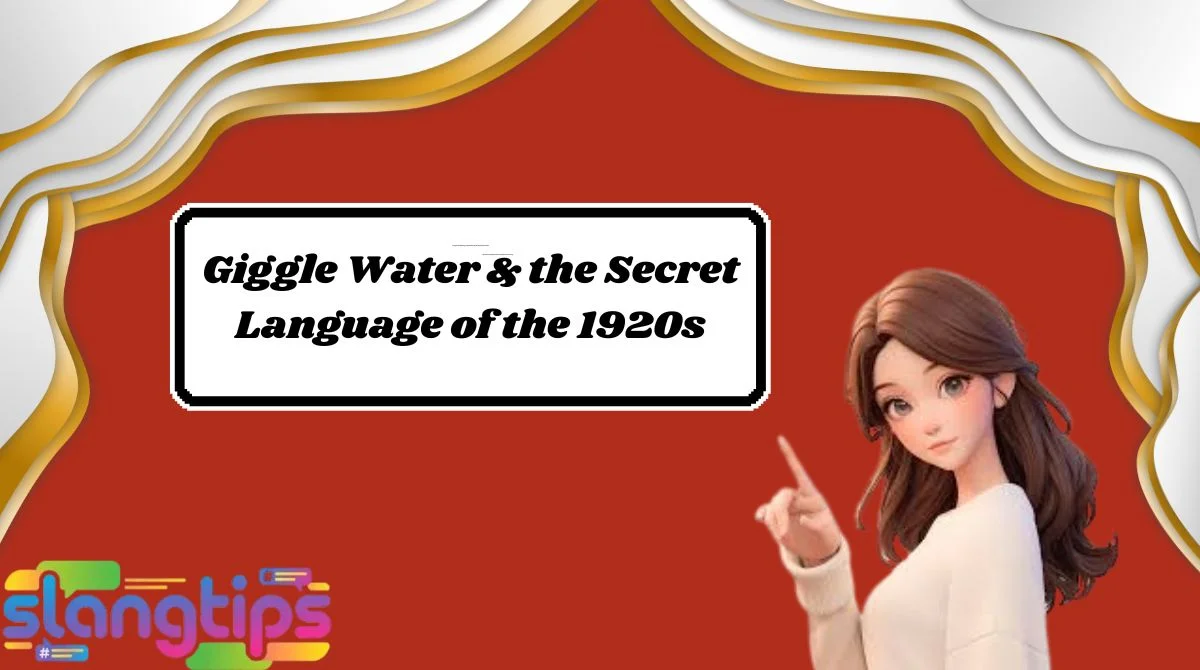
The room hums with jazz. A woman in a feathered headband leans across the table and whispers, “Careful—this giggle water hits harder than it looks.”
Her friend laughs, raising a glass of what is technically illegal alcohol. Across the room, men in tailored suits exchange coded phrases, avoiding the watchful eyes of law enforcement.
No one says “alcohol.” No one needs to.
Slang like “giggle water” wasn’t just playful—it was survival, rebellion, and belonging all at once.
Slang is never just vocabulary. It’s a social signal. It tells you who belongs, who understands, and who doesn’t. In the 1920s, during Prohibition, language became a shield and a badge of identity. Words evolved quickly because culture demanded it—new realities needed new expressions.
Slang builds invisible communities. If you knew the words, you were “in.” If not, you were an outsider. And that dynamic hasn’t changed—even today.
The Psychology & Culture Behind Prohibition-Era Slang
The phrase “giggle water” carries more than humor—it reflects a layered emotional tone.
Emotional tone:
Light, mischievous, slightly rebellious. It softens the seriousness of breaking the law by making it sound playful.
Social meaning:
Using coded slang allowed people to:
- Evade authority
- Signal insider status
- Normalize taboo behavior
Rebellion & bonding:
Calling alcohol “giggle water” transforms an illegal act into a shared joke. It builds group cohesion—“we’re all in on this.”
Pop culture influence:
Jazz music, speakeasies, and flapper culture amplified these expressions. Slang spread through nightlife, performance, and storytelling.
Modern parallels:
Today’s internet slang works the same way.
Slang, then and now, isn’t random—it’s a cultural mirror reflecting humor, resistance, and identity.
16 Slang Terms (Grouped by Tone)
A. Positive / Praise Slang
1. Bee’s Knees
• Meaning: Something outstanding or excellent
• Tone: Enthusiastic / Admiring
• Text: “That new café is the bee’s knees!”
• Spoken: “Your outfit? Absolute bee’s knees.”
• Formal: Exceptional
2. Cat’s Pajamas
• Meaning: Stylish or impressive
• Tone: Playful admiration
• Text: “You look like the cat’s pajamas tonight.”
• Spoken: “That car is the cat’s pajamas!”
• Formal: Very fashionable
3. Doll
• Meaning: Attractive person
• Tone: Friendly / Affectionate
• Text: “You’re such a doll 😊”
• Spoken: “She’s a real doll, isn’t she?”
• Formal: Charming person
4. Swell
• Meaning: Very good or pleasant
• Tone: Warm / Positive
• Text: “Had a swell time yesterday!”
• Spoken: “That was a swell party.”
• Formal: Enjoyable
5. Ritzy
• Meaning: Elegant or luxurious
• Tone: Slightly impressed
• Text: “That place looks ritzy!”
• Spoken: “They moved into a ritzy neighborhood.”
• Formal: Upscale
B. Funny / Playful Slang
6. Giggle Water
• Meaning: Alcohol (especially during Prohibition)
• Tone: Playful / Secretive
• Text: “Bring some giggle water tonight 😉”
• Spoken: “This giggle water’s strong!”
• Formal: Alcoholic beverage
7. Applesauce
• Meaning: Nonsense or foolish talk
• Tone: Light sarcasm
• Text: “That excuse is applesauce.”
• Spoken: “Ah, that’s just applesauce!”
• Formal: Nonsense
8. Baloney
• Meaning: Ridiculous claim
• Tone: Dismissive / Humorous
• Text: “Total baloney 😂”
• Spoken: “That story is baloney.”
• Formal: False statement
9. Hotsy-Totsy
• Meaning: Perfect or just right
• Tone: Cheerful / Playful
• Text: “Everything’s hotsy-totsy now!”
• Spoken: “We’re hotsy-totsy!”
• Formal: All is well
10. Beezer
• Meaning: Nose
• Tone: Silly / Casual
• Text: “He’s got a big beezer lol”
• Spoken: “Watch your beezer!”
• Formal: Nose
11. Flapdoodle
• Meaning: Nonsense talk
• Tone: Dramatic humor
• Text: “That’s pure flapdoodle.”
• Spoken: “Don’t give me that flapdoodle!”
• Formal: Absurd claim
C. Negative / Insult Slang
12. Wet Blanket
• Meaning: Someone who ruins fun
• Tone: Mildly critical
• Text: “Don’t be a wet blanket 🙄”
• Spoken: “He’s such a wet blanket.”
• Formal: Spoilsport
13. Foolish Dora
• Meaning: Foolish person
• Tone: Mocking
• Text: “Don’t act like a foolish Dora.”
• Spoken: “She’s being a foolish Dora.”
• Formal: Uninformed individual
14. Cake-Eater
• Meaning: Arrogant or spoiled person
• Tone: Judgmental
• Text: “He’s such a cake-eater.”
• Spoken: “That guy’s a cake-eater.”
• Formal: Entitled person
15. Flat Tire
• Meaning: Boring person
• Tone: Casual insult
• Text: “That party was full of flat tires.”
• Spoken: “Don’t be a flat tire.”
• Formal: Dull individual
16. Gold Digger
• Meaning: Someone seeking wealth through relationships
• Tone: Critical
• Text: “He thinks she’s a gold digger.”
• Spoken: “Watch out, she’s a gold digger.”
• Formal: Financially motivated partner
The Rise and Fall of Slang
Slang has a lifecycle.
Birth:
A new cultural need or shared experience creates a term.
Spread:
Media, music, or social groups amplify it.
Peak:
Everyone starts using it—it becomes mainstream.
Decline:
It loses its exclusivity and fades.
Evergreen slang:
Terms like “cool” survive decades because they adapt.
Trend slang:
Words tied to specific moments (like “giggle water”) fade with context.
Warning:
Using outdated slang in the wrong setting can feel forced—or unintentionally humorous.
Build Your Own Slang (Fun Section)
Slang creation follows patterns:
1. Word shortening
Example: “Prohib” → for prohibition vibes
2. Sound play
Example: “Fizz-whiz” → for soda or drinks
3. Cultural reference
Example: “Speakeasy juice” → hidden drinks
4. Irony twist
Example: Calling something illegal “vitamin fun”
5. Exaggeration
Example: “Laugh fuel” → for alcohol
Creative Examples:
- “Buzz brew” → drink that gives energy or tipsiness
- “Chuckle syrup” → something that makes you laugh
- “Rebel tea” → anything slightly forbidden
- “Mood mixer” → social drink
- “Jazz juice” → energizing experience
Interactive Practice Lab
Fill in the blanks
- That excuse is total ________.
- Don’t be a ________ and ruin the vibe.
- This place is the ________ knees!
- He’s acting like a ________ eater.
- Bring the ________ water tonight.
- That story sounds like pure ________.
- Everything is ________-totsy now.
- She looked absolutely ________.
- Stop being such a ________ tire.
- That party was pretty ________.
Context Identification
- Which slang fits a boring person?
- Which term signals luxury?
- Which one softens illegal behavior?
- Which phrase shows admiration?
- Which word dismisses nonsense?
Is This Appropriate?
- Using “giggle water” in a formal report
- Saying “bee’s knees” in a job interview
- Calling a colleague a “wet blanket”
- Using slang in marketing campaigns
- Referring to luxury brands as “ritzy” in ads
FAQs
What does “giggle water” reveal about 1920s culture?
It reflects humor, rebellion, and the need for secrecy during Prohibition.
Why do people create slang instead of using formal language?
Slang creates identity, intimacy, and efficiency within social groups.
Is old slang still useful today?
Yes, but mostly for stylistic, historical, or humorous effect.
How does slang spread so quickly now?
Through social media, memes, and digital communities.
Can slang be offensive?
Yes—tone and context determine whether it’s playful or harmful.
Why does slang disappear?
Once it becomes too common, it loses its exclusivity and cultural edge.
Conclusion
“Giggle water” isn’t just a quirky phrase—it’s a window into a world where language carried risk, humor, and identity all at once. Slang evolves because culture evolves. It encodes rebellion, belonging, creativity, and even resistance.
From smoky jazz clubs to modern group chats, slang remains one of the most human ways we shape meaning—and signal who we are.

Mason Reed is a passionate writer who simplifies modern slang and trending expressions to make everyday communication easy and fun.